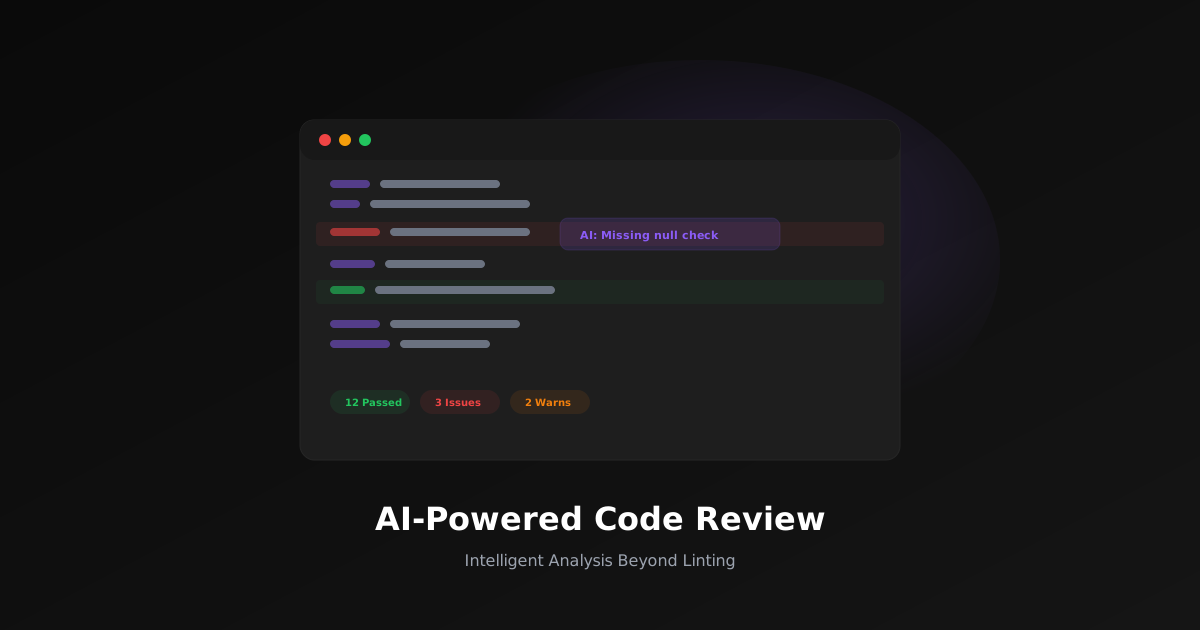
AI Code Review: Going Beyond Linting to Architectural Intelligence
Your linter passes. Your type checker is happy. Your code compiles without errors. But is your code correct? Does it implement what the business actually asked for?
The Limits of Traditional Code Review
Traditional code review — whether human or automated — focuses on:
- Syntax and formatting compliance
- Type safety and compiler errors
- Known anti-patterns and code smells
- Security vulnerabilities from known databases
These are important. But they miss the most expensive category of bugs: logic errors that stem from misunderstood requirements.
Architectural Intelligence in Code Review
WalnutAI's code analysis goes beyond surface-level checks:
- Requirement alignment — Does this code actually implement what the story describes?
- Missing logic branches — Are there edge cases in the requirements that aren't handled?
- Architectural drift — Does this change introduce inconsistencies with the existing system design?
- Orphan code detection — Is there code that doesn't map to any known requirement?
- Test coverage gaps — Which parts of this change have no corresponding test?
From Reactive to Proactive
Traditional code review is reactive — it finds problems after they're written. AI-powered architectural review is proactive. It identifies gaps in real-time, as code is being developed, before it reaches a pull request.
Integration with Your Workflow
WalnutAI integrates with GitHub, GitLab, and Bitbucket to provide AI-powered review comments directly on pull requests. No context switching, no separate tools to learn.
A linter tells you your code is syntactically correct. Architectural intelligence tells you your code is meaningfully correct.