The Complete Guide to AI-Driven SDLC Automation in 2026
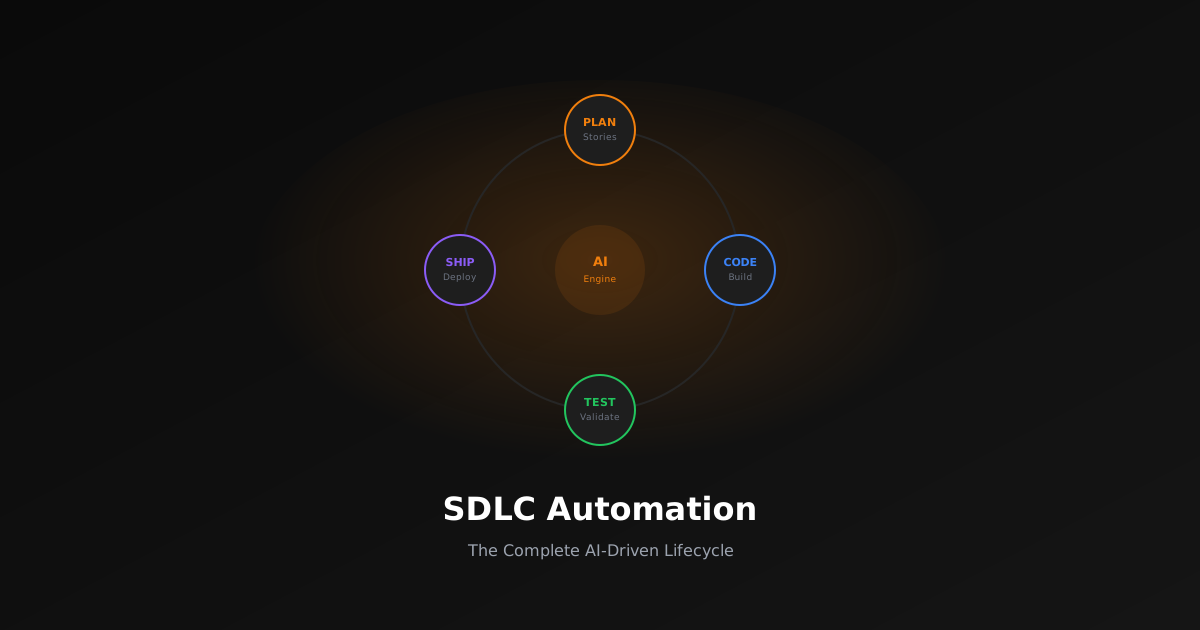
The software development lifecycle hasn't fundamentally changed in decades. Requirements → Design → Build → Test → Deploy → Monitor. What's changed is that AI can now participate meaningfully at every stage.
Stage 1: Requirements Engineering
AI transforms requirements from static documents into living, analyzable artifacts:
- Convert BRDs, FRS documents, and meeting transcripts into structured user stories
- Detect ambiguities, conflicts, and gaps automatically
- Generate acceptance criteria from business requirements
- Maintain traceability from business intent to technical specification
Stage 2: Design & Architecture
AI assists in architectural decisions by analyzing requirements against existing system topology:
- Suggest component structures based on requirement patterns
- Detect potential architectural conflicts early
- Generate API specifications from user stories
Stage 3: Development
AI-powered development goes beyond code completion:
- Generate feature implementations aligned with requirements
- Continuous code review against architectural standards
- Real-time gap detection as code is written
- Automated documentation generation
Stage 4: Testing
AI-generated testing is perhaps the most mature area:
- Test cases generated from requirements in seconds
- Multi-framework support (Playwright, Cypress, Jest)
- Continuous regression testing
- Visual regression detection
Stage 5: Deployment & Monitoring
AI quality gates in CI/CD pipelines ensure only fully validated code reaches production:
- Automated pre-deployment gap analysis
- Requirement coverage validation
- Risk scoring for each deployment
The Unified Platform Advantage
The real power comes from connecting all these stages in a single platform. When requirements, code, and tests live in a connected system, changes in one area automatically surface impacts in all others.
The future of software delivery isn't faster individual stages — it's intelligent orchestration across all stages. AI doesn't replace your team. It gives them superpowers.