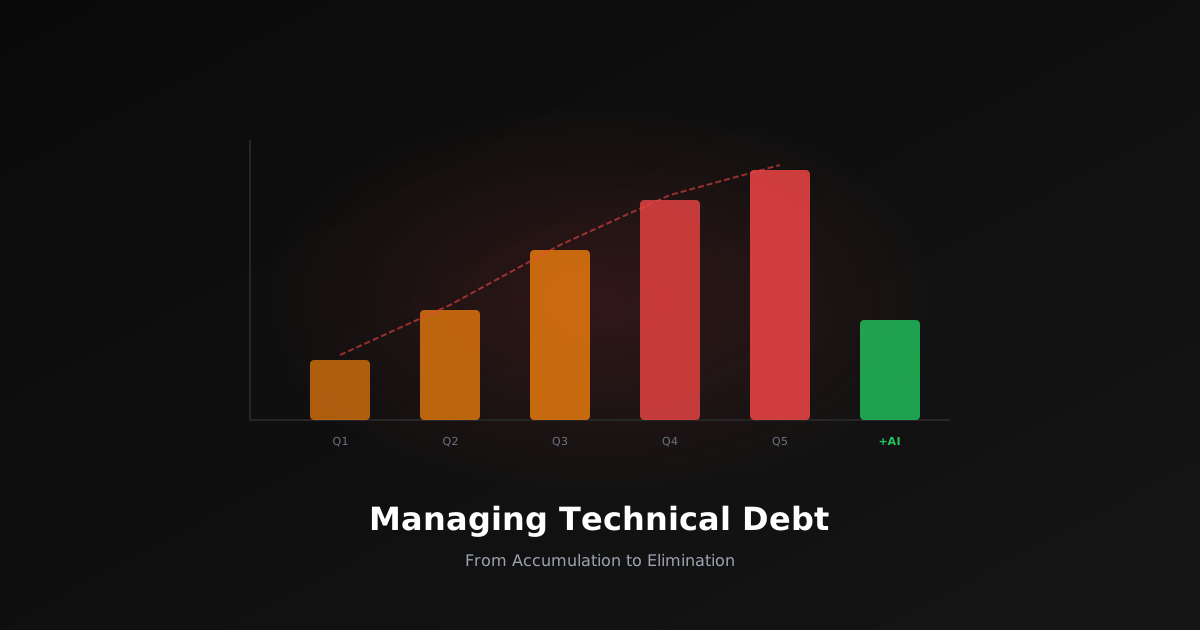
How AI Helps Teams Tackle Technical Debt Before It Becomes a Crisis
Every engineering team knows the feeling: you're sprinting to deliver features, cutting corners you promise to fix later. Later never comes. Technical debt compounds like financial debt — and the interest payments come due at the worst possible time.
The Hidden Cost of Technical Debt
McKinsey estimates that technical debt accounts for 20-40% of the total value of technology estates. That's not a rounding error — it's a massive drag on innovation and velocity.
The symptoms are familiar:
- Simple features take weeks instead of days
- Every change breaks something unexpected
- New team members take months to become productive
- Release cycles keep getting longer
- The team spends more time fixing than building
Why Traditional Approaches Fail
Most teams try to manage technical debt through dedicated "tech debt sprints" or "hardening sprints." The problem? You can't fix what you can't see. Without visibility into where debt exists and how it's growing, you're guessing at priorities.
AI-Driven Debt Detection
WalnutAI's gap analysis engine continuously monitors your codebase for indicators of technical debt:
- Orphan code — Code that doesn't map to any requirement and may be dead weight
- Untested logic — Business-critical code paths without test coverage
- Architectural inconsistencies — Patterns that deviate from the established architecture
- Requirement drift — Features that have evolved away from their original specification
- Dependency risks — Outdated or vulnerable dependencies that increase maintenance burden
Prioritized Remediation
Not all technical debt is equal. WalnutAI helps you prioritize remediation based on business impact — focusing on the debt that's actually costing you velocity, not just the debt that's easiest to fix.
Technical debt isn't a failure of discipline. It's a failure of visibility. When you can see debt accumulating in real-time, you can address it before it becomes a crisis.