Requirements Traceability: The Missing Link in Software Quality
You've written 200 user stories. Your team has committed thousands of lines of code. You have hundreds of test cases. But can you answer this: Does every requirement have a corresponding implementation and test?
The Traceability Gap
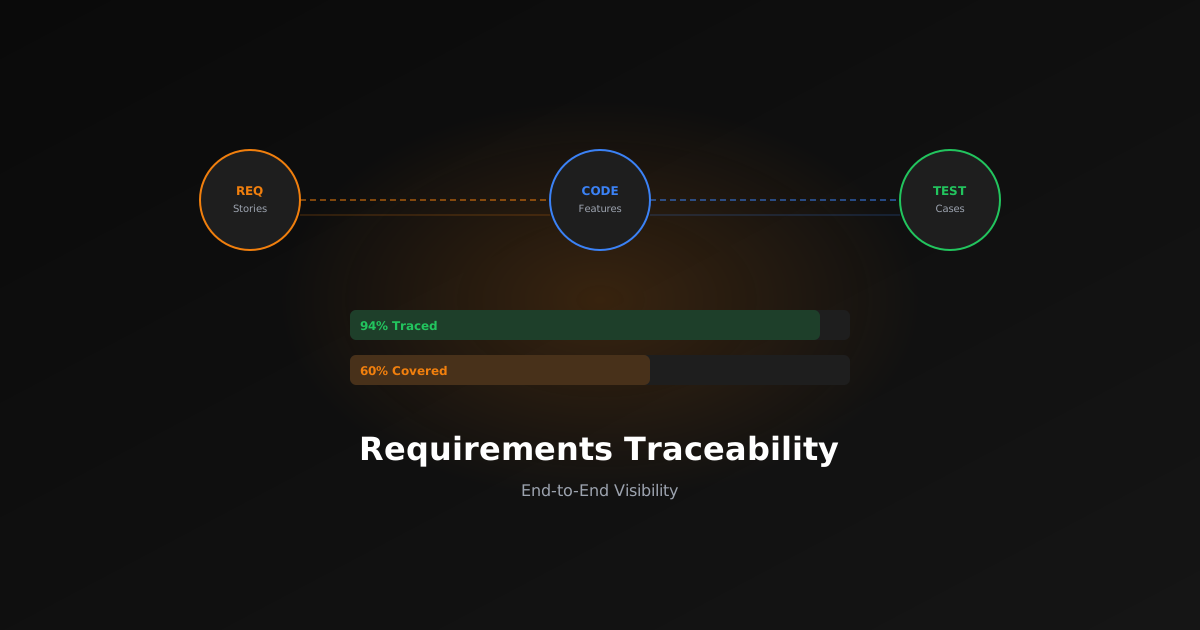
Requirements traceability is the ability to trace every business requirement through to its implementation in code and validation through test cases. Without it, you're flying blind.
Common symptoms of poor traceability:
- Features that were specified but never implemented
- Code that exists but doesn't map to any business requirement
- Test cases that validate scenarios no one asked for
- Compliance audits that take weeks instead of minutes
Bidirectional Traceability
WalnutAI maintains bidirectional traceability across your entire SDLC:
Forward trace: Requirement → User Story → Code → Test Case
Backward trace: Test Case → Code → User Story → Requirement
This means you can answer questions in both directions:
- "What code implements this requirement?" (forward)
- "Why does this code exist?" (backward)
- "What tests validate this feature?" (forward)
- "What requirement does this test cover?" (backward)
Impact Analysis
When a requirement changes, traceability gives you instant impact analysis. You can see exactly which code files, which test cases, and which other requirements are affected. No guesswork, no missed dependencies.
Compliance Made Simple
For regulated industries — healthcare, finance, government — traceability isn't optional. It's mandated. WalnutAI generates traceability matrices automatically, turning weeks of audit preparation into minutes.
Traceability isn't just about tracking artifacts. It's about ensuring that every dollar spent on development delivers the value that was intended.