Shift-Left Testing: Why Catching Bugs Early Saves Millions
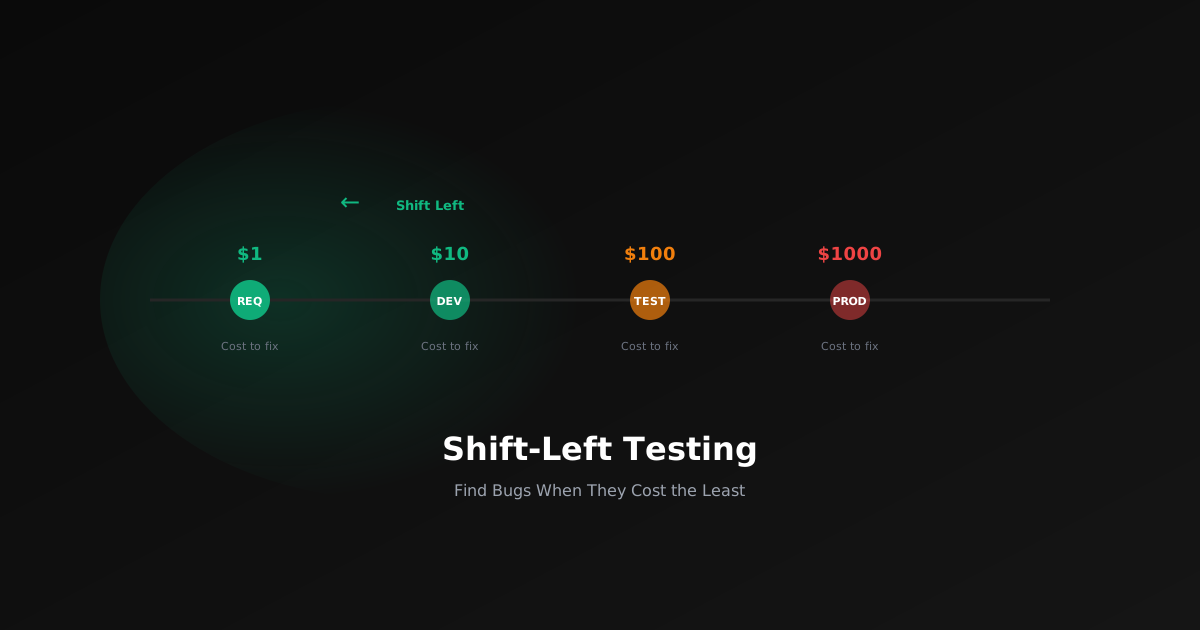
The economics of software defects are brutal. According to IBM's Systems Sciences Institute, a bug found during the requirements phase costs $1 to fix. The same bug found in production? $100 to $1,000.
What Is Shift-Left Testing?
Shift-left testing means moving quality assurance activities earlier in the software development lifecycle. Instead of testing being a gate at the end of the pipeline, it becomes a continuous activity that starts at the moment requirements are written.
The Traditional Problem
In traditional workflows, the testing cycle looks like this:
- Requirements are written and handed off to development
- Development builds features over several sprints
- QA receives the build and begins testing
- Bugs are found, sent back to development
- The cycle repeats until quality is "good enough" to ship
By the time defects are found, significant development investment has already been made. Rework is expensive, timelines slip, and teams are demoralized.
How AI Enables True Shift-Left
WalnutAI fundamentally changes this dynamic by generating test cases the moment requirements are created. This means:
- Requirement validation — Gaps and ambiguities are flagged before any code is written
- Test-first development — Developers have test cases before they start coding
- Continuous coverage tracking — Every code change is mapped against requirements in real time
- Automated regression — New changes are validated against the entire test suite instantly
Real-World Impact
Teams using shift-left testing with WalnutAI report:
- 73% reduction in production defects
- 40% faster time-to-market
- 60% less time spent on manual testing
- 2.3x more features shipped per quarter
The best time to find a bug is before it exists. Shift-left testing with AI makes this possible by turning requirements into test cases before a single line of code is written.