Your Code Already Knows What It Does. We Just Write It Down into Structured Requirements.
WalnutAI AST-parses your repository and generates structured Epics, Features, and User Stories from what the code actually implements. Reverse requirements engineering and AI codebase documentation for legacy systems and undocumented codebases.
Trusted by teams inheriting codebases without documentation
Of enterprise codebases have incomplete or missing requirements documentation
Average onboarding time for a QA engineer on an undocumented legacy codebase — Code-to-Story eliminates this
To generate a full requirements baseline from a codebase that’s been in production for years
Stop treating your legacy codebase as a documentation black hole
Gartner research estimates that over 70% of enterprise software systems lack adequate requirements documentation — not because teams were careless, but because requirements and code drift apart the moment a sprint closes. Code-to-Story reverses the problem: instead of writing requirements and hoping code follows them, it reads the code and generates the requirements it already represents. Every system has a story. WalnutAI just writes it down.
The hierarchy comes from your folder structure, not the AI’s imagination
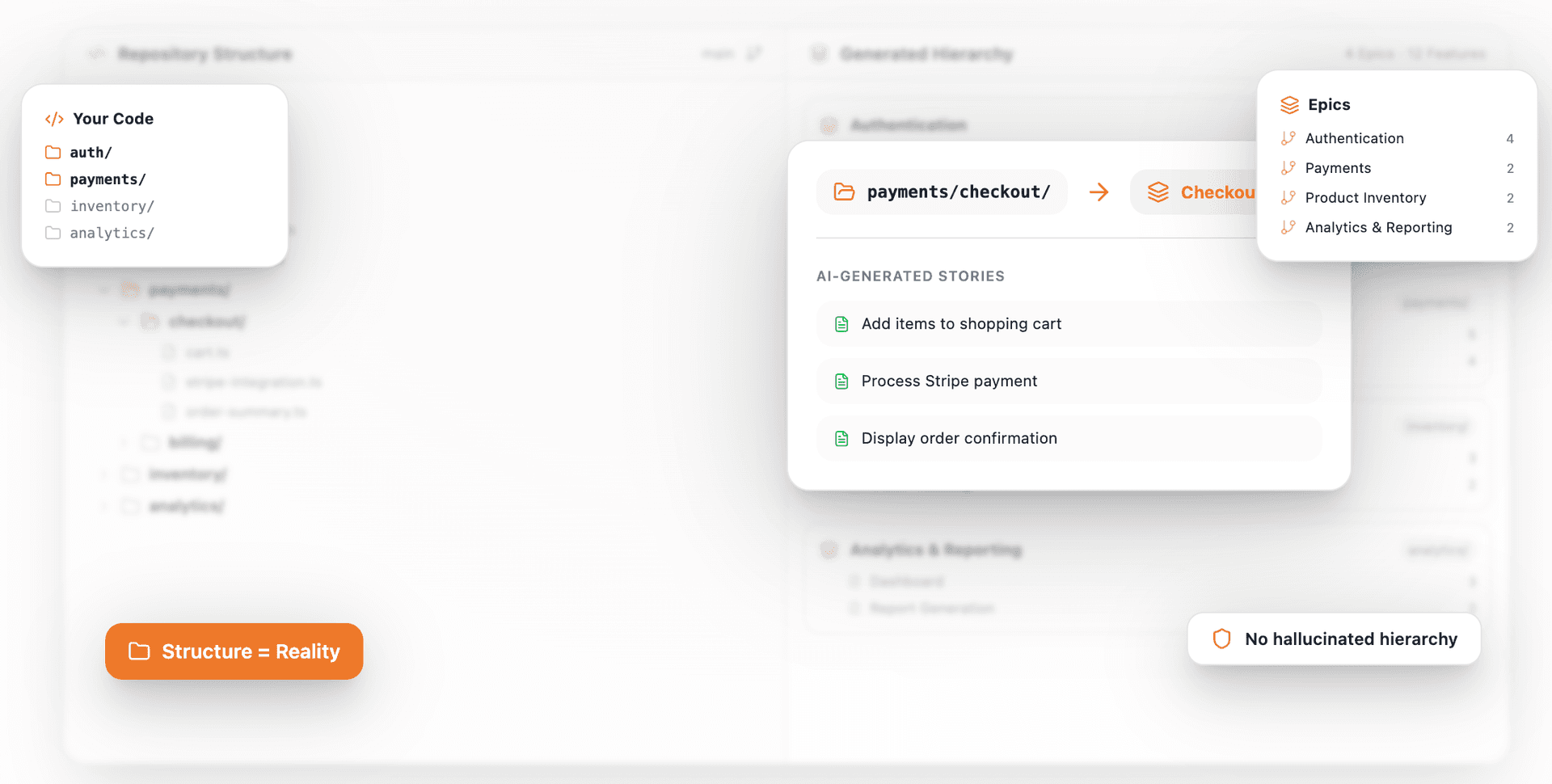
Epic and Feature names are derived directly from your repository’s actual directory structure — auth/ becomes “Authentication”, payments/checkout/ becomes “Checkout”. The AI generates story titles and descriptions, but the structure is always grounded in reality.
Stories are grounded strictly in what the code implements
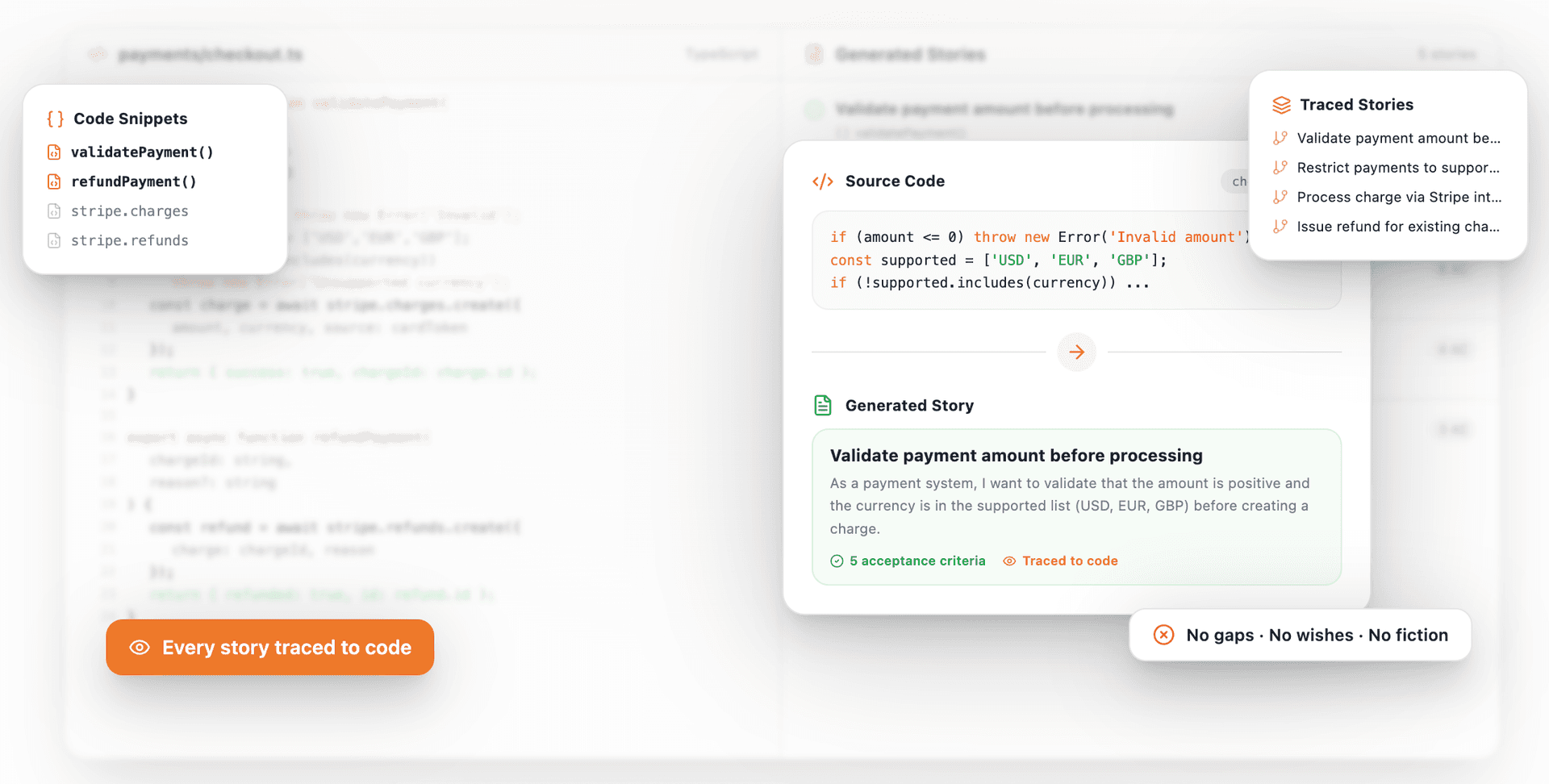
WalnutAI queries the most relevant code snippets for each story and generates descriptions and acceptance criteria based on what the code actually does — not what someone thinks it should do, not gaps, not wishes. If the code doesn’t do it, the story won’t claim it does.
Solves the cold-start problem for legacy systems
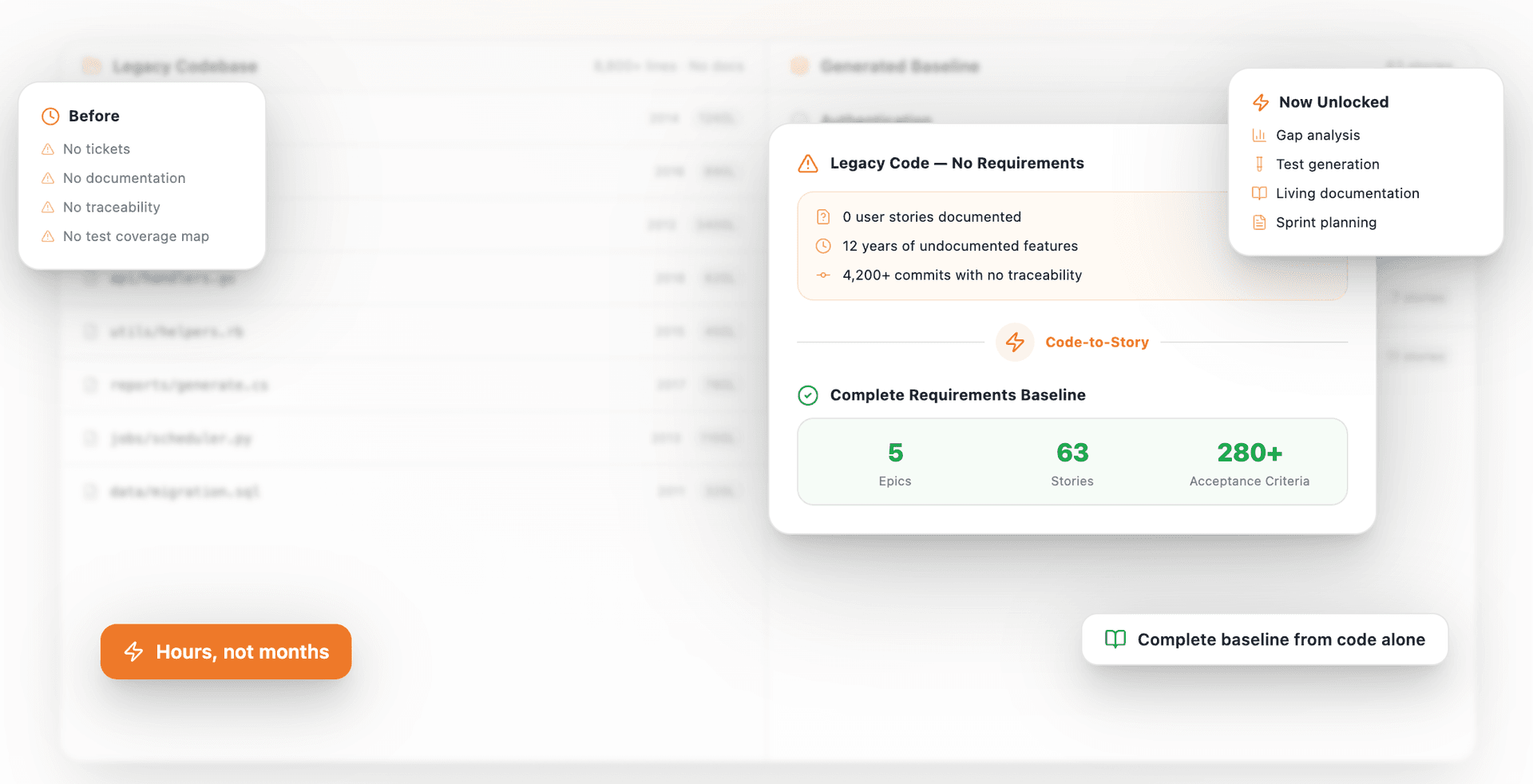
Every codebase that predates modern requirements practices — years of features with no tickets, no documentation — can now get a complete requirements baseline in hours. Once Code-to-Story runs, gap analysis and test generation have the stories they need to operate.
Re-indexes efficiently as your codebase evolves
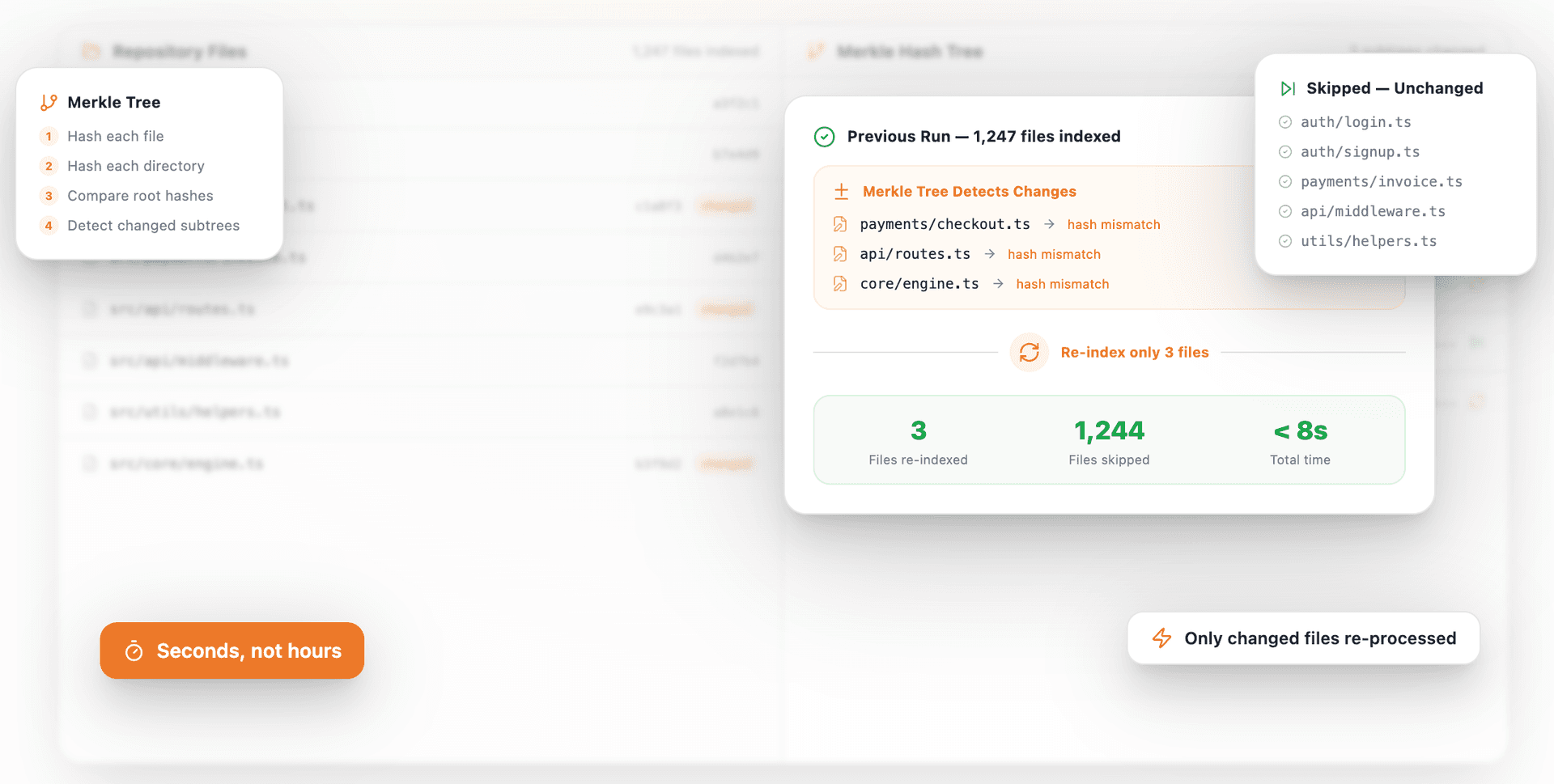
Merkle tree change detection means subsequent runs only re-index files that have actually changed. For large repositories already indexed, incremental updates are fast — keeping your requirements baseline current without full re-processing every time.
Ready to ship with confidence?
See how WalnutAI connects requirements, code, testing, and deployment into one intelligent workflow.